Guide to Speeding Tickets
📅 2026 Update: Changes in Speeding Ticket Laws
Since the original article was written, several important changes have occurred in speeding ticket laws across various states. These updates impact fines, speed limits, and processes for handling tickets. Readers can find detailed information about these changes below, as well as the original article continuing further down the page.
🚦 Florida Speeding Fines
As of April 1, 2026, Florida has updated its base fines for speeding violations. For example, if a driver exceeds the speed limit by 6 to 9 mph, the base fine is now $25. A speed increase of 10 to 14 mph results in a base fine of $100.
These changes reflect a more structured approach to fines based on the severity of the speeding.
🛣️ New York Speed Limit Increase
Effective January 1, 2025, New York raised the maximum speed limit on rural interstates from 55 mph to 65 mph. This change may impact how drivers approach speed limits in less populated areas. Drivers should stay aware of the new limits to avoid potential violations.
🏎️ Texas Maximum Speed Limit
In Texas, as of March 2026, a new maximum speed limit of 85 mph has been implemented on certain toll roads. This is now the highest speed limit in the nation. Drivers on these roads should exercise caution and be mindful of the new speed regulations.
📅 Florida Ticket Response Time
In Florida, drivers now have 30 days from the date of the citation to respond to a speeding ticket. Options include paying the fine, contesting it in court, or attending a driver improvement course to avoid points on their driving record. Prompt attention to these deadlines is crucial to avoid additional penalties.
📌 Key Points to Remember
- 🚦 Florida's updated base fines for speeding violations.
- 🛣️ New York's speed limit increase to 65 mph on rural interstates.
- 🏎️ Texas now has the highest speed limit at 85 mph on certain toll roads.
- 📅 Florida requires a 30-day response to speeding tickets to avoid penalties.
💡 Tips for Handling Speeding Tickets
It's important to go over the details of your specific situation with your attorney.
🏁 Understand Your State's Fines
Each state has different maximum fines for speeding violations. For example, Alabama and California both cap fines at $100, while Pennsylvania can reach $1,000. Familiarizing yourself with these rates can help you understand the potential costs involved.
📄 Know Your Options in Florida
In Florida, you have options for responding to a speeding ticket. You can pay the fine, contest it in court, or take a driver improvement course. Choosing the right option for your situation can help manage points on your driving record.
🚨 Watch for School Zone Penalties
In New York, speeding in a school zone can result in enhanced penalties. Fines can range from $45 to $1,200, along with the possibility of jail time. Being aware of these stricter rules can help prevent serious consequences.
🕒 Keep Track of Deadlines
If you receive a speeding ticket in Florida, keep in mind the 30-day response deadline. Missing this deadline may lead to additional penalties, including possible license suspension.
✅ Consider Defensive Driving Courses
In some states, attending a defensive driving course can help you avoid points on your driving record. Check your state’s eligibility rules to see if this option is available to you.
🏆 Ranked by User Reviews (2026)
This section highlights services that assist drivers in dealing with speeding tickets. The order follows Trustpilot ratings checked in October 2026. Ratings can change over time, and it's essential to consider customer experiences as part of your decision-making process.
🥇 1. Off The Record
Off The Record has been rated 4.3 on Trustpilot. It is known for offering flat-fee legal services aimed at fighting traffic tickets. The service boasts a 97% success rate with a full money-back guarantee.
However, some reviewers mention issues with unresponsiveness, especially regarding negative feedback.
🥈 2. GetDismissed
GetDismissed holds a 4.0 rating on Trustpilot. This service assists California drivers in contesting traffic tickets and offers a system for trial by written declaration. While many users find this helpful, some reviews highlight limited customer support, which could impact the experience of users needing assistance.
🆓 Free Government Assistance
In Florida, the Department of Highway Safety and Motor Vehicles (FLHSMV) provides resources for drivers regarding traffic violations and driver improvement courses. This can be a good starting point for those looking for free options to address their speeding tickets.
🔎 Comparing Services for Speeding Tickets
- 🏷️ Check Trustpilot ratings for user experiences.
- ⏳ Look at the success rates of services offered.
- 📞 Consider the level of customer support available.
- 💰 Assess the pricing structure and guarantees provided.
❓ Frequently Asked Questions
❓ What should I do if I receive a speeding ticket?
If you receive a speeding ticket, you can pay the fine, contest it in court, or attend a driver improvement course if eligible. Each option has different implications for your driving record.
🕒 How long do I have to pay my speeding ticket in Florida?
In Florida, you have 30 days from the date of the citation to respond. Failing to respond within this timeframe can result in additional penalties.
🚦 What are the penalties for speeding in a school zone in New York?
In New York, speeding in a school zone can lead to fines ranging from $45 to $1,200 and possible jail time. Enhanced penalties are in place to increase safety around schools.
🌍 Are speeding laws the same in all states?
No, speeding laws vary significantly by state. Each state has different maximum fines, speed limits, and processes for handling tickets.
📅 Can I contest my speeding ticket?
Yes, you can contest your speeding ticket in court. It’s important to gather any evidence that may support your case before you go to court.
⚖️ What happens if I don’t respond to my speeding ticket?
If you fail to respond to your speeding ticket in Florida, it can lead to additional penalties, including a possible license suspension.
⚖️ Recent Court Cases Related to Speeding Tickets
Several recent court rulings have impacted how speeding tickets are enforced and processed. These rulings can affect the rights of drivers and the obligations of law enforcement.
- Tennessee court denies DUI defendant's appeal requestCourt of Criminal Appeals of Tennessee · September 23, 2026
- Texas Court upholds DWI conviction in Miller caseTexas Court of Appeals, 3rd District (Austin) · October 8, 2026
- Texas court upholds DWI conviction in community-caretaking caseTexas Court of Appeals, 3rd District (Austin) · October 8, 2026
- Court denies subpoena enforcement in traffic stop caseDistrict Court, District of Columbia · October 8, 2026
To stay informed, you can browse more rulings on the news page.
End of October 2026 Update
What are Speeding Tickets?
A speeding ticket is a form of traffic ticket that is given to motorists who travel faster than the allotted speed limit. Traffic tickets are notices issued by law enforcement officers or officials to motorists or other users. Traffic tickets formally accuse motorists of committing a traffic violation. In general, a traffic ticket comes in two forms—they will either cite a moving violation (including speeding tickets) or non-moving violations, such as parking infractions.
Speeding tickets will be given to individual motorists if they travel beyond the speeding limit. Speeding limits will range depending on jurisdiction and the type of road the motorist is traveling on. For instance, on highways or major roadways the average speed limit is 65 miles per hour. In residential areas, the speed limit will be significantly lower, often times between the ranges of 25 to 45 miles per hour. Regardless of the location, if a motorist is caught travelling above this limit he or she will be pulled over and given a speeding ticket. All jurisdictions will post speed limits for given roads via traffic signs. These signs are universal; they will list the speed limit in large bold lettering with the phrase “speed limit” listed above.
Speeding tickets are given to motorists by local, county or state police officers. It is up to the discretion of these law enforcement officers to administer speeding tickets to motorists who are in violation of the jurisdiction’s laws. Typically, law enforcement officers will only administer speeding tickets for egregious or aggressive violations of the speed limit. In this sense, law enforcement officers, will pull-over motorists for travelling at least 10 miles over the allotted speed limit. Regardless of this leeway, it is important to stay at or below the speeding limit when driving.
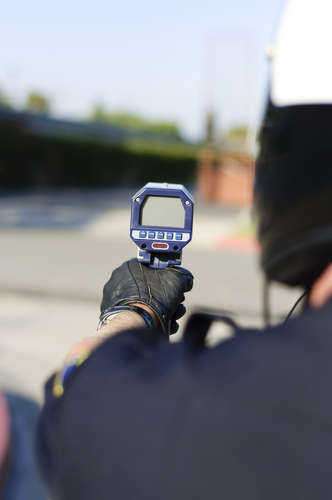
Speeding tickets are always attached with a fine. This fine will vary based on the severity of the violation. If the motorist is travelling only 5 to 10 miles above the legal limit, their ticket will be attached with the minimum fine. If the motorist is travelling above 25 miles per hour above the limit this fine will likely increase; any flagrant violation of the speed limit will result in an exorbitant fine and perhaps additional penalties, such as a suspension of the operator’s driver’s license. Additionally, a motorist will susceptible to increased penalties if the individual has committed similar offenses in the past. Similar to other traffic laws or DUI laws, multiple offenses will yield additional penalties.
What are my Options if I’m given a Speeding Ticket?
In the United States, the majority of traffic laws are codified in various ways by state, county or municipal laws. Each state’s Department of Motor Vehicles will maintain a database of motorists and their coordinating traffic violations. When a motorist is given a speeding ticket, the individual will be given the option to mail the ticket—with its coordinating payment—to the local court system or the court for the jurisdiction in which the traffic violation took place. On the speeding ticket, the motorist must check—in the appropriate box—whether they wish to contest the ticket or plead guilty. A plea of guilty will require the motorist to submit a payment for the satisfaction of the fine. The response to the speeding ticket must be prompt—a failure to respond to speeding tickets will result in additional penalties.
If the motorist wishes to contest a speeding ticket, a hearing will be set by the Court upon the request. These traffic hearings are heard before a judge or magistrate depending on the city or state. These hearings may be continued and witnesses or the issuing police officer may be subpoenaed. At any point during the traffic court, the motorist may retain a legal professional to represent him/her in traffic court. Consulting with a traffic lawyer may prove beneficial to the motorist because these legal professionals understand how to contest speeding tickets in the given state, county or town. Motorists will typically schedule the hearing for a time at which the issuing police officer is likely to attend. If the law enforcement officer or representative responsible for the ticket fails to attend, the court judge will typically dismiss the charge. Because of the local laws attached to speeding tickets, each judge, state, county or municipality will handle traffic cases a tad differently.
If the motorist wishes to plead guilty to the speeding ticket and the fines attached, the outcome will be equivalent to a conviction following the hearing. Upon conviction, the motorist will be fined a monetary sum and an additional penalty referred to as “points.” This penalty is distributed differently based on state law; however, all point systems are employed to chart a motorist’s driving history. If a motorist is convicted of speeding in a different state than the one he or she is registered, individual agreements between the states will decide if, and how, the driver’s home state applies the other state’s charges. If an agreement does not exist, the conviction will be applied locally to the state where the speeding infraction took place.
What is the Point System?
A point system is one where a police force or a Department of Motor Vehicles issues cumulative penalties or points to motorists following a conviction for violating traffic laws. Speeding tickets are one way to accumulate points; the more points a motorist has on his or her driving record the more the individual will be fined for subsequent traffic violations. Points may be either added or subtracted from one’s driving record. Major offenses will lead to more severe penalties; egregious violations of traffic laws will result in hefty fines and multiple points.
Points are applied after the traffic violation is committed and cancelled following a defined length of time, typically a few years. If the motorist accumulates a specified amount of points he or she may be disqualified from driving for a set length of time. Fines and other penalties will be applied additionally, either for a violation or after a certain number of paints has been accumulated by the motorist. The purpose of the point system is to identify, deter and subsequently penalize repeat offenders of traffic law. By doing this, the point system ultimately streamlines the legal process.
The point system in the United States is implemented on a state level. Because of this localized structure, the point system will be applied in a variety of ways—or not at all—depending on the state. Aspects of a motorist’s driving record will be reported to their respective insurance companies, who will use them in determining rates and fees to charge. Insurance companies will also evaluate motorist driving records to decide whether or not to renew or cancel the respective insurance policy.
Examples of how Speeding Tickets will affect my Driving Record:
In the state of California, drivers who accumulate speeding tickets may be deemed negligent operators of motor vehicles. If a driver in California accumulates a certain number of speeding tickets their right to drive will be taken away. Major offenses, such as reckless driving or driving under the influence, will earn 2 points and remain on the driver’s record for 10 years in the state of California. “Reckless driving” may refer to excessive speeding, typically 30+ miles above the legal speed limit. Less serious offenses, including minor speeding infractions, will remain on the driver’s record for 3 years and will accrue one point. A driver in the state of California will be deemed negligent if they accumulate the following points in the given time frames:
• 4 points in 12 months
• 6 points in 24 months
• 8 points in 36 months
Negligent drivers will be placed on probation for one year (6 months of their probation will be applied with a suspension of their driver’s license). When the suspension or revocation ends, the driver is required to re-apply for a license to legally drive in the state.
The judge may suspend the driver’s license following a conviction for the following traffic laws:
• Excess breaking of the speed limit or reckless driving
• Hit-and-run
• Driving under the influence of drugs or alcohol
• Assaulting a motorist or pedestrian when the event occurs on a roadway (this is known as road rage)
• Failure to stop the vehicle as required when signaled at a railway grade crossing.
If a driver is cited for speeding or another traffic violation, the presiding judge may offer the motorist the opportunity to attend Traffic Violator School. This alternative penalty is delivered as a form of rehabilitation for the motorist. A driver will have to participate in these schools for a period of 18 months for the offenses to be formally expunged. Whenever a citation for a speeding ticket is dismissed, the record of citation is forever removed and no more points will accumulate.